Interior safety
Review interior safety in the context of condition, access, timing, and the rest of the commercial property.
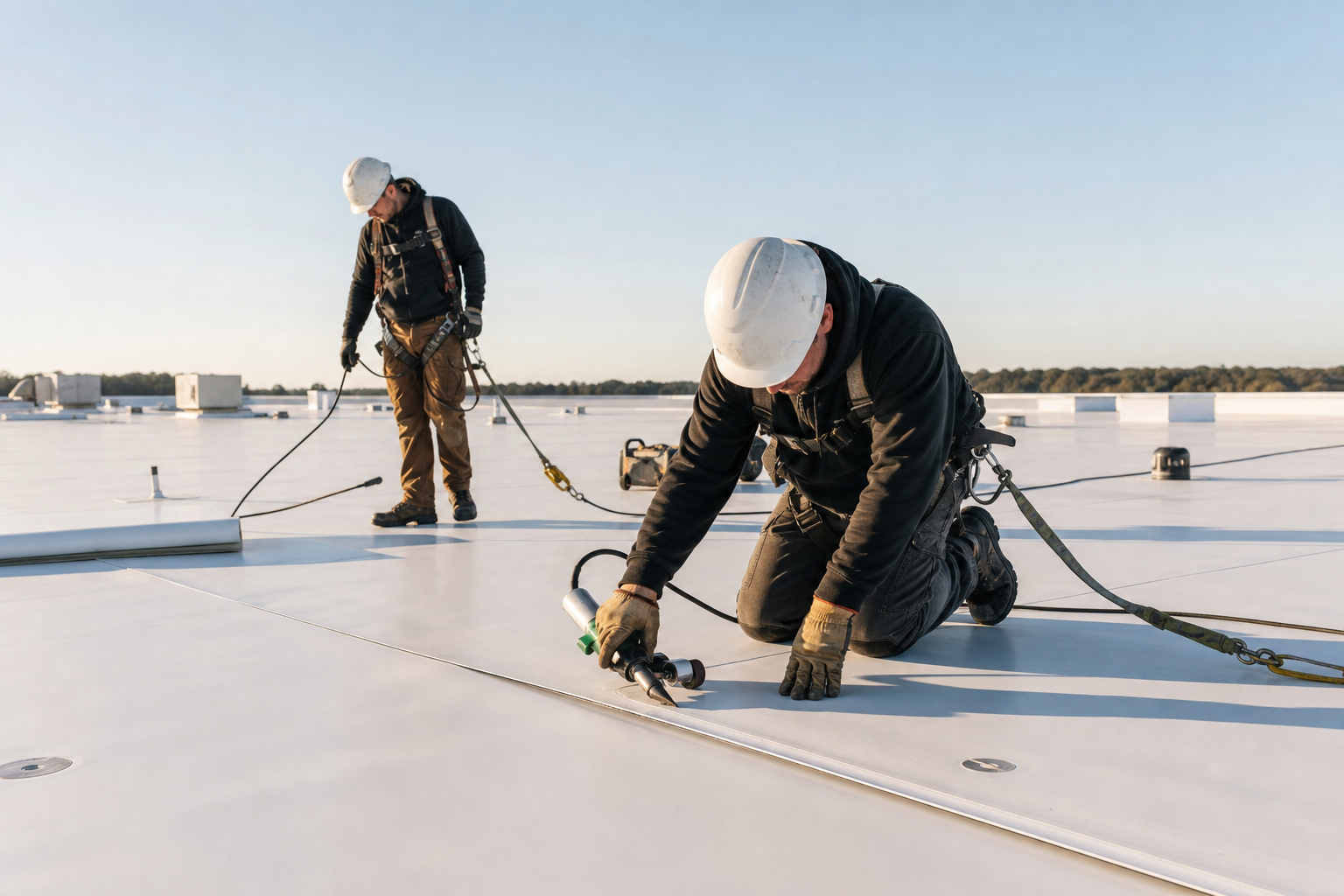
A disciplined emergency response protects people, inventory and equipment while the moisture path and permanent repair are investigated.
Every recommendation should connect visible condition to the property decision, work sequence and operating reality.
Organize the visible commercial roofing conditions, affected areas, and decision drivers.
Separate immediate needs, maintainable conditions, phased priorities, and capital work.
Account for access, occupants, equipment, traffic, weather, and scheduling before mobilization.
Protect people and equipment, contain interior water only when it is safe, document where water appears, and avoid walking the roof. Then organize an urgent commercial roofing request.
No. Water may travel along insulation, deck flutes or structural members before becoming visible. Diagnosis should trace the path rather than patch only above the stain.
No. Temporary work manages immediate exposure. The permanent scope depends on the source, assembly, moisture, compatible materials and field conditions.
Share the location, affected system, visible condition and operating need to organize the next step.
Active roof leak?
Use the emergency roofing path so the urgent request is clearly identified.